
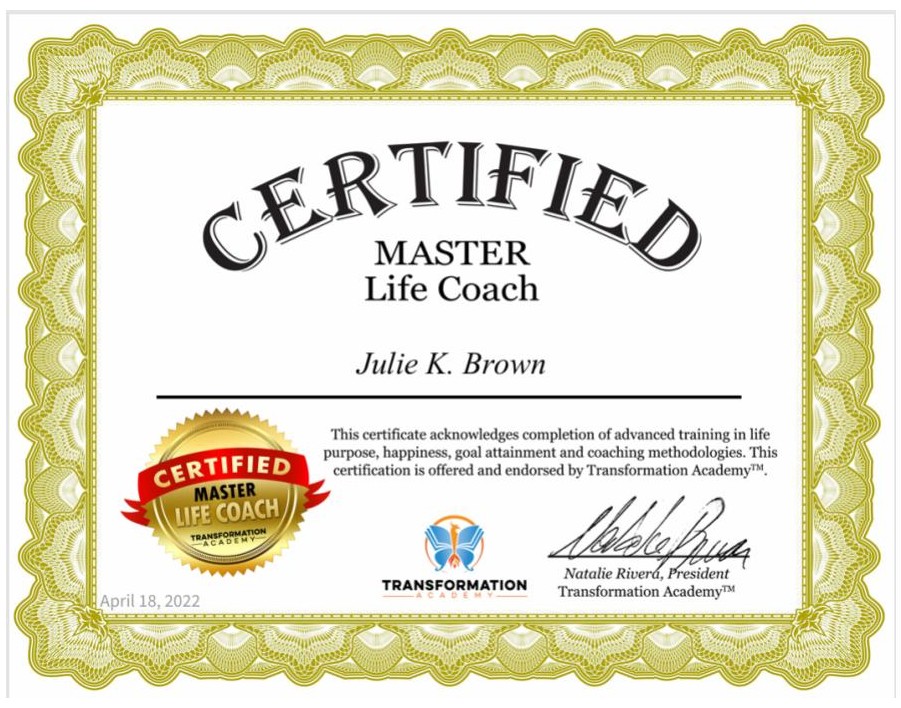
Master Life Coach training
My Master Life Coach certification brought together four areas of training: professional life coaching, life purpose, happiness, and goal success. Together, they give me a foundation for helping you understand what matters to you, recognize your strengths, and turn a wish for change into something you can begin.
I bring those tools into conversations with care for the life you are already living. We can look at what you’ve tried, what keeps getting in the way, and what support might help. The four course badges below show the parts of this training and how I draw on them.
Professional Life Coach
This part of my training explored awareness, emotions, beliefs, decision-making, self-talk, mindfulness, and taking action. Those ideas become useful when we connect them with something real in your life: a difficult conversation, a decision you’re avoiding, or a change you want to make.
I’ll help you notice patterns, consider another perspective, and recognize abilities you may have lost sight of. There is room to talk through uncertainty and practice a different approach. You choose the direction; I offer questions, tools, and encouragement as we work out a step you feel ready to try.
Life Purpose Life Coach
“What do I want to do with my life?” is a question that can return at many stages. You might be facing a change, finding that an old role no longer fits, or wanting more room for something you care about. My life purpose training offers tools for reflection, self-understanding, and action.
I want to help you explore your strengths, values, interests, and priorities without deciding for you what a meaningful life should look like. We can make room for curiosity, notice what feels important, and try a step in that direction. Your purpose and your path are yours to define.
Happiness Life Coach
Happiness can mean something different to each of us. I want to understand what it means to you, including the things that bring you joy and the parts of life that have been making it harder to feel like yourself. This training explored how beliefs, familiar patterns, choices, and emotional responses can shape our experience.
We can look gently at what supports you, what drains you, and whose expectations you may be carrying. There is room for hard feelings in that conversation, too. My aim is to help you make choices that reflect your own values and priorities, with more space for what matters to you.
Goal Success Life Coach
Some things are easier to work toward with someone beside you. My goal success training uses four steps:
- Know what you really want
- Believe you can achieve it
- Create a concrete plan for success
- Stay committed and motivated
We can use those steps to find a focus, break a goal into manageable parts, and notice progress. If something isn’t working, we’ll look at what got in the way and adjust. I want accountability to feel supportive, with encouragement, honest conversation, and room for the responsibilities and energy you actually have.
Meditation Coach and Facilitator
When life feels crowded, a pause can give us a little room to notice what is happening. My meditation training includes guided meditation, preparation, and tools for developing a practice. I can introduce these gently and explain what we’re trying as we go.
We can begin with a short practice, notice how it feels, and talk about whether it is useful to you. There is no rush to do it perfectly. My intention is to offer another way to explore peace, connection, balance, and ease at a pace that feels comfortable.
Education and continued learning
My studies in early childhood education and special education gave me a foundation for understanding how children learn, develop, and communicate. Working alongside families has kept me asking questions and adding to that learning.
Over the years, I’ve sought out training in child development, school partnerships, family needs, communication, caregiving, and community support. I want to understand the concerns people bring, help them find words for what is happening, and make useful information easier to put into practice.
The subjects below reflect that continuing commitment. Families change, children grow, and there is always more to understand. I’ll bring my knowledge and experience while staying curious about yours.
Formal Education
- Associates Degree in Early Childhood Education
- Bachelor of Science in Special Education
Niche knowledge of
- Multiple Intelligences
- Executive Functioning across settings
- Meltdown Management
Specialized
- ADHD Professional Training
- Choice Making for People with Intellectual Developmental Disability
- Autism Spectrum
- Zones of Regulation
- Assessing Family Needs and Strengths
Parent & Family Specific
- Parent Empowerment Program
- Grandparents Raising Grandchildren with Carole Cox, Fordham University
- School and Mental Health Partnerships
- Diagnosis & Interventions for Younger Children
- Evidence-Based Focused Clinical training on Building Routines
- Opportunities In Children’s Mental Health Services – CFTSS
- Dispute Resolution in Special Education
- Overcoming school refusal
- Building Bridges Through Sensory Integration
- Documenting Educational Gains or Regression
- School Anxiety and Avoidance
- Resolution-Focused Crisis Support Strategies
Community-Based
- Mandated reporter
- Motivational interviewing
- Crisis management/safety planning
- SafeTALK Suicide Alertness
- Compassion Fatigue
- Mental Health First Aid USA
- Justice Center Code of Conduct
- Understanding Cultural Diversity
- Addressing Trauma with Multigenerational Latinx Families
- Working with LGBTQ Youth
- Trauma Informed System of Care
- NYAPRS Training: Safety for All – De-Escalation Strategies
- Social Security Benefit Eligibility and Application Process
How I bring this learning to my work
I care about how this learning can help in the ordinary moments of your life: preparing for a school conversation, finding a steadier way to respond to a difficult moment, or making room for your own needs. These are some of the areas I draw on when we work together:
-
Understanding child development and mental health needs
-
Supporting families through school, social, and behavioral challenges
-
Trauma-informed strategies that reduce stress at home
-
Tools for building confidence and healthier parent–child connections
-
Coaching methods that emphasize both parenting skills and self-care
- Helping parents navigate school meetings, understand available supports and advocate for their child’s needs.
- Turning personal and family goals into manageable steps that build on individual strengths.
Thank you for taking a little time to understand the learning behind my work. If something here connects with what you are going through, you’re welcome to tell me about it. We can begin there.